
The First stone and the The Power of Recognition
Though I was born and raised within Christianity, I no longer know if I can call myself religious. At least not in the way I once did. I do not sit in pews on Sunday mornings. I do not lace my speech with scripture. I do not pattern my life around commandments handed down as law. And yet I cannot call myself an atheist either. I do not hold the certainty that nothing greater exists.
If anything, I live in the tension between belief and doubt, in that shadowed in-between where both speak at once. Agnosticism comes close, but even that word feels too finished, too resolved. I am not resolved. I am open, but unconvinced. And somewhere in that ambiguity, I have found a strange comfort. These days the questions seem more alive than the answers.
Not long ago, I began watching The Chosen. I expected little from it. I pressed play with the detached curiosity of an observer, prepared to watch it as one studies a relic, more artifact than story. But it disarmed me. It was not the spectacle I feared. It was something quieter. Something sincere. And then came a moment that stopped me.
A woman, shattered and lost, living under the name Lilith, beyond the reach of everyone around her. At the end of the first episode, Jesus meets her. He does not preach. He does not display wonder or command the heavens. He simply calls her by her name. “Mary.” That is all. Just a name, spoken with an authority that is not loud, but certain, with a compassion so deep it bends the air itself. And in that moment, she changes. I felt it.
I cannot say with conviction that Jesus was God. I do not know if I ever will. But even if he was only a man, he was not an ordinary one. He was a man who could pierce through brokenness and see what still remained whole. He was a man who offered dignity where none was left. And that alone is miracle enough.
In a world forever intoxicated with purity, power, and performance, he seemed to care for none of it. He cared for people. He cared for the unseen. The moment he called Mary by her true name was not a thunderous act of divinity, yet it felt divine all the same. Recognition, I realized, is its own holiness. To be called back to yourself when you are lost is a salvation beyond ritual.
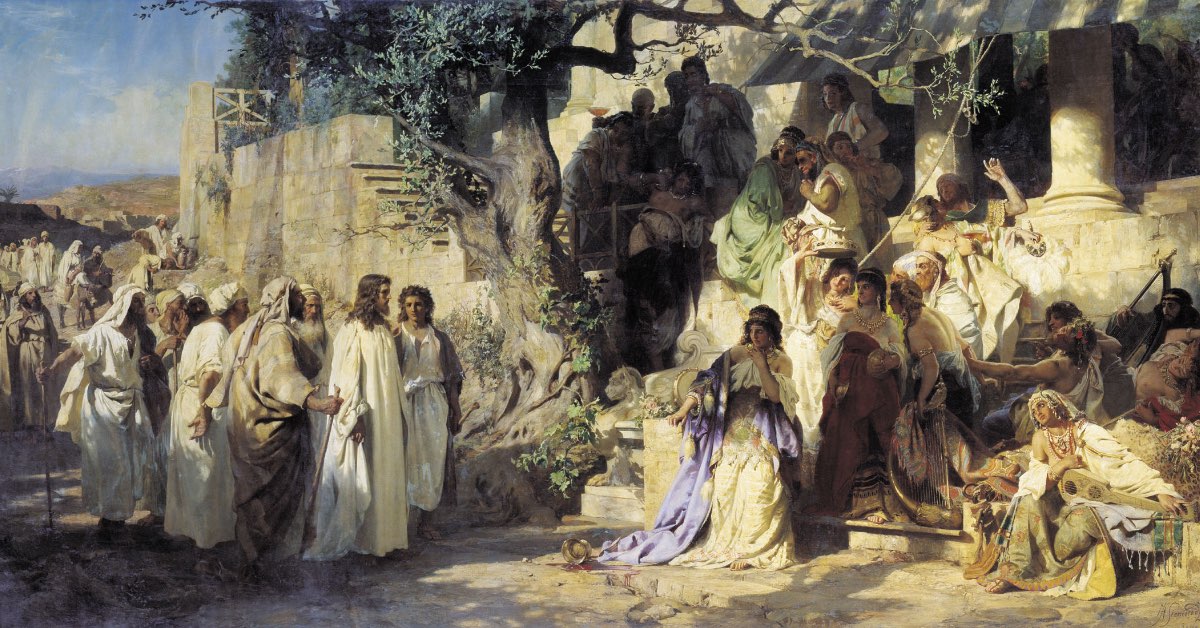
There is another story that lingers with me more than any tale of wonders. A woman stands surrounded by a mob, stones heavy in their hands, law heavy in their hearts. The crowd is ready, and justice is certain. And Jesus interrupts them without rage, without force. He does not scold them or raise his voice. He simply says, Let the one who has never sinned cast the first stone. Nothing more. Just one sentence. And the world bends.
It is as though all their certainty collapses under the weight of those words. Not in condemnation, but in revelation. He does not strike them down. He holds up a mirror. And one by one, the stones fall. The crowd dissolves into silence. The woman remains.
That moment contains more power than any miracle of fire or flood. It unmakes the eternal hunger for judgment. It calls out the ancient sport of shaming others, a sport we still play with venomous zeal. Even now, it is easier to condemn than to reflect, easier to display our supposed virtue than to sit with our faults. We still reach for stones, though ours are digital and public, designed to humiliate rather than to kill. And yet, from an ancient dust-road, a man speaks across centuries with a single invitation: look inward first. That is still a revolution. That is still rare.
So no, I am not religious as I once was. Perhaps I never will be again. But I cannot dismiss him. For I have come to believe that Jesus stood for something that escapes empire, something untouched by fear, something gentler than law. He stood for grace. Not a grace that demands allegiance or bends knees, but a grace that speaks to the soul without needing permission. A grace that reminds us that to see someone fully, and to call them by their name, is as close to holiness as we may ever come.
