
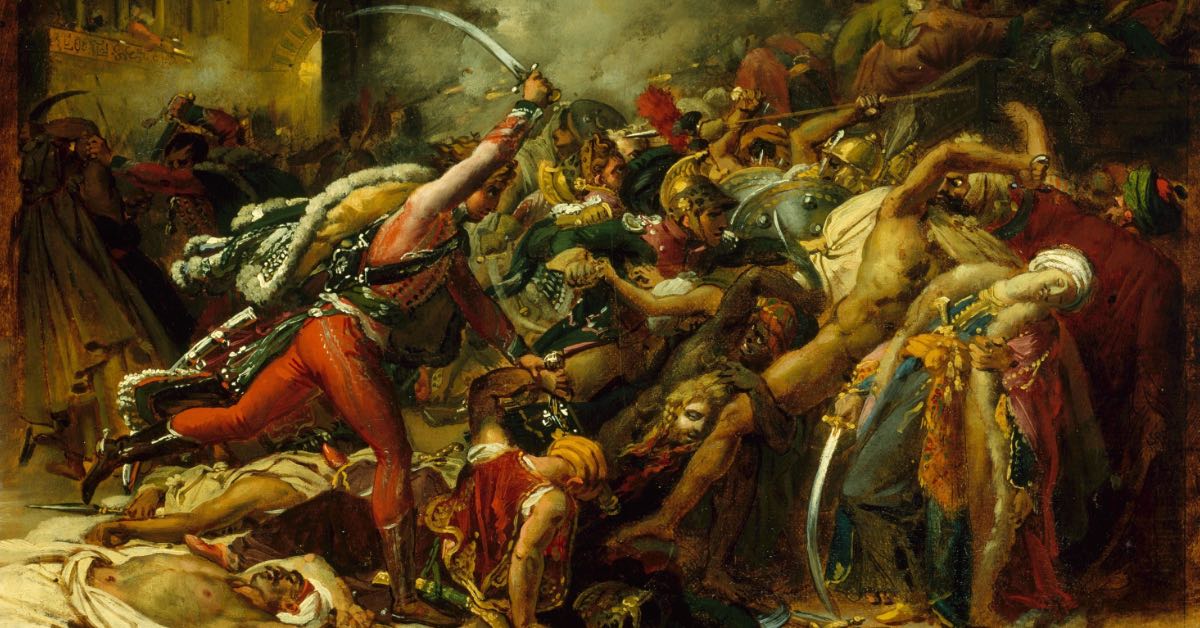
The Powerful Balance Between Anarchy and Leadership
The relation between Anarchy and Leadership is often understated in its importance. Many view it only as authority, when in truth it is a delicate balance between responsibility and power. When leaders neglect their people, that negligence soon transforms into corruption. History shows us that corruption rarely remains hidden; eventually it is discussed, questioned, and resisted. From there begins a cycle: leadership is challenged, revolts emerge, the ruling class uses its power to suppress, and yet the tide of public will almost always prevails. The French Revolution exemplifies this arc, a monarchy out of touch with its subjects collapsed under the weight of its corruption, giving way first to revolution, then to terror, and eventually to anarchy.
While the overthrow of oppressive systems may feel like victory, what follows is often perilous. Anarchy does not signify freedom but the absence of order, where law and morality can vanish overnight. During the Bangladeshi revolution, after Sheikh Hasina fled, the state collapsed into chaos. People once oppressed turned into oppressors themselves, storming homes and committing heinous acts and even parading with her undergarments. Similar outcomes occurred in Libya after Gaddafi’s fall and in Iraq after Saddam Hussein’s regime collapsed; the absence of structure opened space for sectarian violence and opportunistic brutality. Revolution without a framework for governance breeds lawlessness, and lawlessness exposes humanity’s primal instincts: to dominate, to humiliate, and to exploit the vacuum of power.
One of the most enduring stabilizers in the face of anarchy has been fear, not only of law or leaders but of something beyond human authority. Religion, regardless of personal belief, has historically maintained peace where states fail. The fear of divine judgment, the idea of an omnipotent and omniscient deity, prevents societies from collapsing entirely into savagery. In medieval Europe, when kingdoms disintegrated under warlords, the Church remained a unifying force. In many parts of the Islamic world, religious structures tempered tribal conflicts with moral codes. Even today, in times of collapse, religion often steps in as the final moral anchor. Without such a framework, people tend to spiral into animalistic behavior, unchecked by either law or conscience.
Monarchies, dictatorships, and democracies all attempt to solve the same problem: preventing anarchy while managing power. Yet rulers are humans, not gods, and they too are tempted by corruption. Dictators such as Idi Amin in Uganda or Ferdinand Marcos in the Philippines lived like kings while their nations crumbled. In democracies, accountability serves as a check, though it is imperfect. Politicians in many nations operate in small bubbles of privilege, enjoying anarchic freedom of their own while demanding order from everyone else. This is why democracy, despite its flaws, remains resilient: it grants the people a form of power to question, restrain, and, if necessary, replace their leaders. This balance between people and power is fragile but vital.
Humanity’s story is one of cycles: revolt, collapse, anarchy, and new order. Rome’s fall led to centuries of feudal fragmentation before stability returned. The Russian Revolution toppled the Tsar but birthed the brutality of Stalin. Even modern uprisings like the Arab Spring reveal how revolutions without sustainable governance often descend into bloodshed before settling under new authority. Humans are, at their core, animals, we fight, dominate, and compete. Civilization is the thin shell that restrains these instincts, and leadership is the glue that holds the shell together. Leaders need their people, and people need their leaders. When this mutual trust breaks, anarchy lurks just one push away, reminding us of how close chaos always is.
