
Cinema Paradiso: Feelings are never understood
I recently watched Cinema Paradiso by Giuseppe Tornatore and felt drawn into a type of cinema that seems almost lost today. These lighthearted, beautiful films have a tenderness that speaks louder than action and spectacle. Cinema Paradiso reminded me that stories don’t need to be grand to have power. They can be quiet and subtle. Within their silence, there’s an emotional depth that stays with you long after the final frame. I realized how much I miss this storytelling style, where the true essence of a film lies not in its scale but in its gentleness.
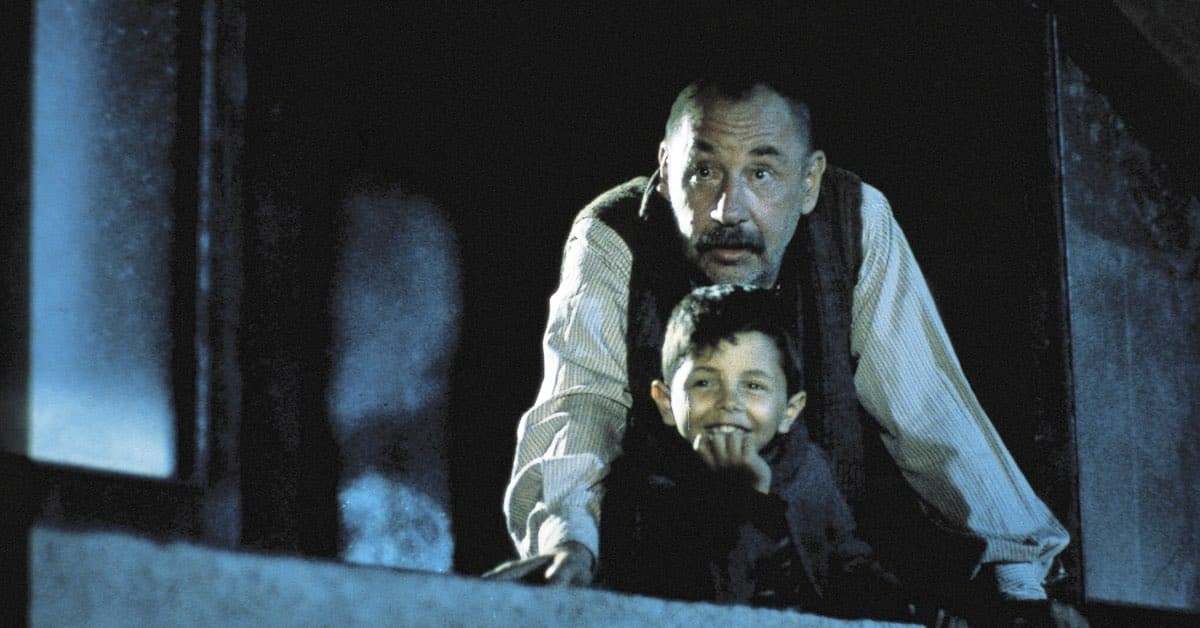
The friendship between Salvatore and Alfredo is central to Cinema Paradiso. It’s different from the friendships we often see in movies. It isn’t a bond of equals. Alfredo is much older and wiser, sometimes gruff, while Salvatore is a boy full of curiosity and innocence. Their connection resists simple definitions of warmth and companionship, yet it is beautiful in its own way. Friendship isn’t always about being the same; sometimes it’s about filling each other’s voids. Watching them, I felt like I was witnessing a type of love that’s rare in today’s cinema; an affection rooted not in romance but in respect, patience, and a deep understanding that goes beyond words.
For me, this is the highest form of cinema. While I’ve enjoyed many films that left me smiling, I find myself yearning for these quiet and soulful stories in a world full of loud action, endless fighting, and tales that often confuse spectacle with substance. Modern blockbusters have their own appeal, but there’s something irreplaceable about a film like Cinema Paradiso that takes its time, trusts its audience, and speaks softly, knowing that silence can convey more than noise ever could.
Among the many memorable moments in the film, one conversation between Alfredo and Salvatore (Toto) lingered with me. Alfredo tells Toto at one point, “Feeling can never be understood.” He refuses to explain a story’s ending, insisting that Salvatore needs to experience it for himself. Then he recounts the tale of the princess and the soldier, an incomplete story whose meaning Toto only grasps later in life. Those words, “Feeling can never be understood,” resonate in my mind long after the credits rolled. It’s such a simple phrase, yet it carries the weight of human emotion.
This moment prompted me to think deeply about empathy. We often use the word casually, as if we know its true meaning, but do we ever fully understand another person’s feelings? We often describe empathy as putting ourselves in someone else’s shoes, yet we never fully fit into those shoes. At best, we interpret. At best, we approximate. Pain that seems trivial to one person might be devastating to another. A heartbreak that some overcome in months could leave others stuck for a lifetime. We empathize through our own experiences, never completely touching the rawness of someone else’s truth.
The world tends to encourage us to dismiss certain emotions. Maybe it has to. If we fully felt every grief, heartbreak, or small loss, we might struggle to move on. But that doesn’t make those feelings any less significant for those who experience them. To belittle does not mean to erase. Beneath the surface, there are endless possibilities, perceptions, and variations of feelings, each shaped by our lives and the wounds we carry.
So I return to Alfredo’s words: feelings cannot be understood. They can only be felt, and only by the one who lives them. Perhaps what we can do is accept this truth. Instead of trying to fully understand others, we can create space for their mysteries. This, in its own way, is a deeper form of empathy; not claiming to comprehend but honoring the unknowable. For me, that’s what Cinema Paradiso ultimately represents; a recognition of the fragile and fleeting connections that make us human. It’s not about understanding everything, but cherishing what we cannot explain.
Ultimately, this film isn’t just a story about movies, friendship, or nostalgia. It’s a reflection on memory, on time passing, and on how art allows us to feel without demanding full understanding. Cinema Paradiso is more than a film; it reminds us that tenderness, silence, and the mysteries of the heart still matter in a world that often forgets them.
