
A phone you didn’t ask for
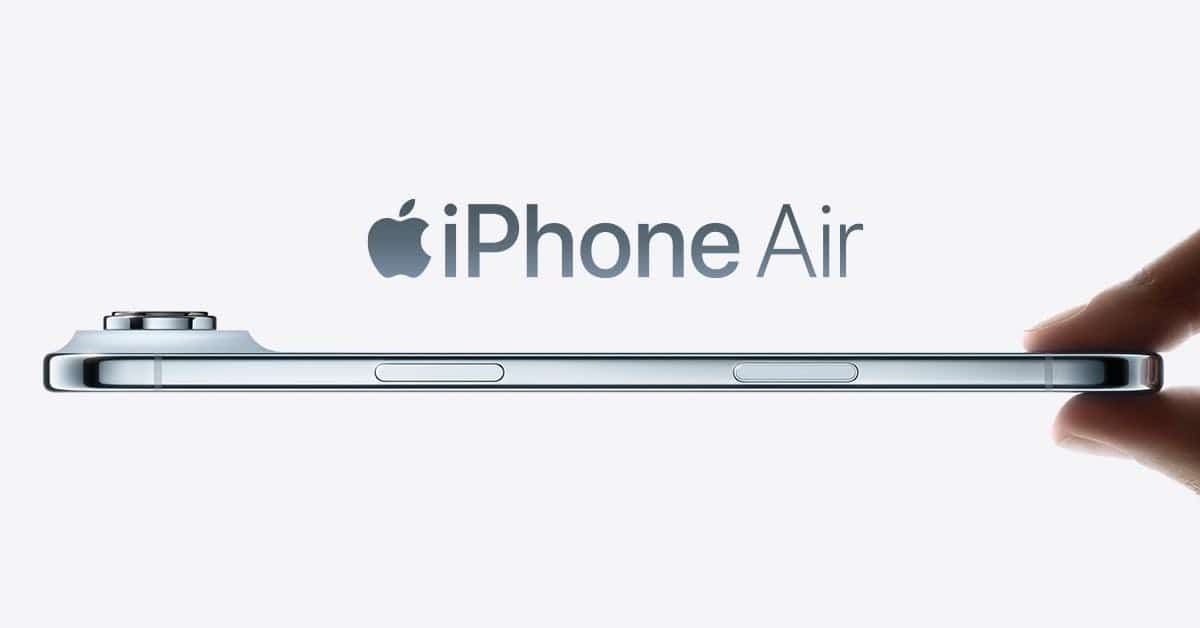
Apple Event 2025 gave us what they proudly call their thinnest phone yet, a mere 5.6mm thick. Sleek? Yes. Impressive engineering? Maybe. But the bigger question is, why? Who asked for a phone this thin, and who actually needs it? Instead of solving real problems, Apple seems obsessed with shaving millimeters off devices while piling up the price tag. At $999 (₹1,19,900 in India), this iPhone Air isn’t just fragile in design, it’s fragile in purpose.
On paper, the Air’s A19 Pro chip does have a slight edge over the A19 in the iPhone 17. Geekbench scores show a single-core difference of just 3608 vs. 3895, but multicore is more noticeable at 8810 vs. 9746. But does this difference actually matter? Not at all. I think we’ve reached chipset saturation in smartphones. Such immense power in a pocket device is wasted, the average user will not feel it. Whether it’s a 5-core GPU with hardware-accelerated ray tracing on the Air or a 6-core GPU on the Pro, no one will see a real difference, especially now that Apple finally gave all models a 120Hz display in 2025.
In 2025, you’re paying a thousand dollars for a single 48MP Fusion main camera with 2x telephoto. Meanwhile, the $799 iPhone 17 has a dual setup with main plus ultrawide, with the same telephoto. Both have an 18MP front camera. How is this justified? Then comes the battery. Apple claims 27 hours for the Air, compared to 30 on the iPhone 17. Yet, they bundle a MagSafe power bank. Why would you need an external pack if Apple were confident in its battery? This accessory isn’t a gimmick but a necessity, and at $100 extra, you’re essentially paying $1,100 which is dangerously close to the $1,200 Pro model.
Apple is quietly stripping away every removable component. First the headphone jack, then the removable battery, and now with the iPhone Air, even the SIM tray is gone. Only the base and Pro models retain it, but not for long. Eventually, everything will be eSIM-only, locking you further into Apple’s walled garden. Add their war against right to repair; these devices are anti-repairable to the core. When you can’t fix it, do you even own it? Spending a fortune on a device you don’t truly control is a sad reality.
Apple has also failed to deliver on promises. AI features they marketed two years ago, features they sold devices on are still missing. No accountability, no liability. This isn’t just about a thin phone. It’s about corporate monopoly, manufactured limitations, and stripping users of ownership while charging them more each year. The thinnest phone in the world may be sleek, but it’s also a reminder of how much Apple has taken away.
