
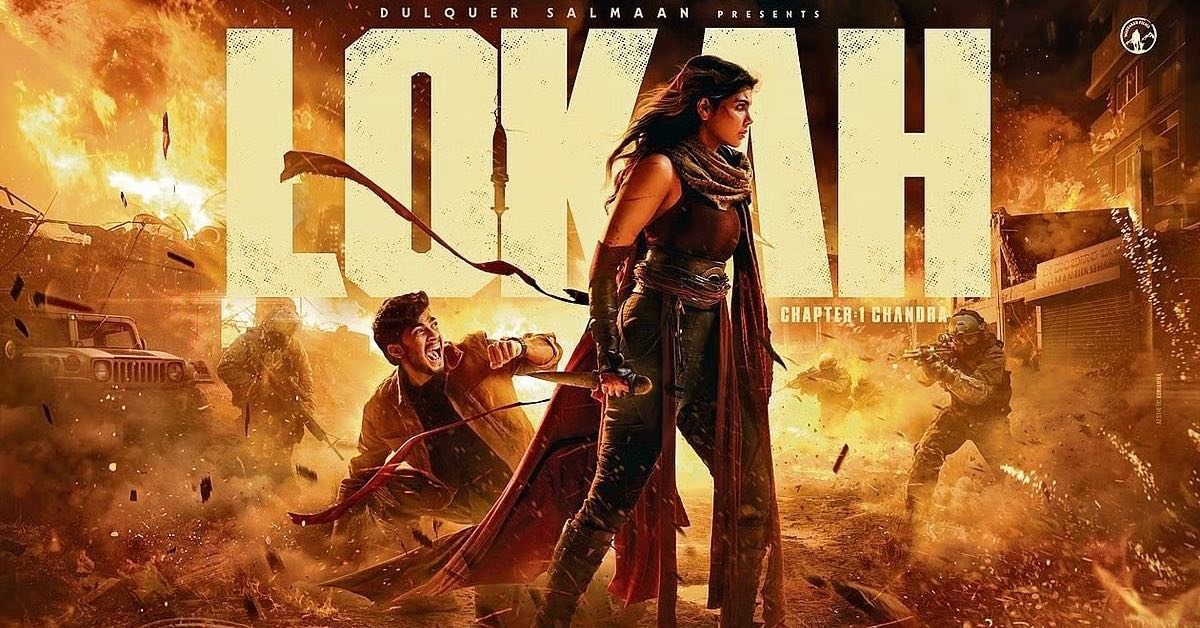
When Folklore Becomes Superhero: Lokah
Lokah Chapter 1: Chandra is a film that arrived with tremendous promise and a refreshing approach to storytelling. At its heart, it is a spectacular and bold attempt that deserves recognition. Yet the initial reception set the bar unrealistically high. Comparisons with DC and Marvel began pouring in almost immediately, and this is where things began to slip. With those expectations in mind, the film struggled to give audiences that solid final push. I am not a professional critic, only a viewer sharing what I felt worked and what did not, so there will be a few spoilers ahead.
Let me begin with what I loved. The concept is exceptional. The Lokah universe, if I may call it that, is based on folklore rather than borrowed comic book heroes. We meet characters like Yakshi, the demonic female spirit, Chathan, a mischievous goblin-like demon, and Odiyan, a shape-shifting magician. What is striking is that these figures are traditionally seen as villains, but here they take center stage as protagonists. This inversion of perspective is brilliant.
Instead of creating another Superman or Spiderman, Malayalam cinema chose to reclaim its folklore and offer a new way of looking at it. In the past, we saw something similar in Vadakkan Veeraghadha, where a villain of folklore was reframed as a hero. Lokah continues that tradition in a modern, expansive way.
The plot, I would say, leans toward good. It is not mediocre, but a few parts felt unnecessary or distracting. For instance, there is a subtle past-life reference that added little value, and the male supporting character who repeatedly distracted Neeli during her battles came across as a cliché that I found irritating. However, these were exceptions. Overall, the storytelling was engaging.
The real highlights were in the technical departments. The color grading was exceptional, the locations were breathtaking, and the art direction elevated the film into a visual feast. The VFX work was handled beautifully, never overwhelming but integrated seamlessly. I especially loved the sequences told in a painting-like format, often used for flashbacks. That style of visual storytelling was mesmerizing.
The film also gave audiences moments of sheer delight with its cameos. Dulquer Salmaan, Tovino Thomas, Sunny Wayne, and a glimpse of Shoubin Shahir all made appearances, each embodying a folklore-inspired character. Then there was Mammootty’s towering presence, represented by little more than his hand and a few words, yet enough to create an electrifying moment for fans. These cameos signaled the immense potential of the Lokah universe. The idea of building an entire superhero saga from folklore feels limitless and exciting.
Performances across the board were solid. Kalyani Priyadashan as Neeli (Kaliyankaatu Neeli) carried the film with power and grace. Nasleen as Sunny Kurein did what he always does, though this time it felt more repetitive than fresh. Chandu Salimkumar as Venu was a delight, his comic timing echoing his father’s brilliance. Sandy as Inspector Nachiyappa Gowda gave a standout performance as a villain one could genuinely hate. The rest of the cast also played their parts well.
The finest element of all was the music. Jakes Bejoy delivered a score that was everything a superhero film should have. It elevated scenes, heightened emotions, and gave the film its pulse. This was hands down the best part of the experience.
I also want to acknowledge Dulquer Salmaan and Wayfarer Films. Supporting such experimental cinema is a brave move, and distributing profits with the crew is an unprecedented gesture in Malayalam cinema, perhaps any mainstream cinema. Even if symbolic, this decision deserves appreciation and sets a precedent that others should consider.
Now, to the drawbacks. Nasleen’s character, as I mentioned earlier, felt repetitive and distracting. Beyond that, the greatest setback was not in the film itself but in the hype around it. The comparisons with Marvel and DC created expectations that no Indian film, especially one with a thirty-crore budget, could meet. What Lokah achieved with such limited resources is extraordinary, and in fact, the subtlety of its VFX was more effective than any overblown spectacle.
In the end, Lokah Chapter 1: Chandra is one of the finest superhero films I have seen. With its budget, it achieved what few industries could dare to attempt. It has even sparked discussions about whether it might overtake L2 Empuraan to become the highest-grossing Malayalam film of all time. If that happens, it will be remarkable for another reason: an industry hit carried by a female lead. That in itself would be historic.
Kudos to the team. Lokah is not perfect, but it is daring, imaginative, and an absolute milestone for Malayalam cinema.
